Late Fall Lawn Fertilizer: A Complete Guide
If you're standing in the garage staring at a bag labeled “winterizer,” you're in the same spot a lot of homeowners hit every year. The mowing has slowed down, the leaves are dropping, and the lawn looks like it's wrapping up for the season. It's easy to assume feeding it now doesn't matter much.
It matters a lot.
Late fall lawn fertilizer is less about making the grass look good today and more about setting up what happens next spring. The trick is choosing the right nutrients, applying the right amount, and timing it before the lawn shuts down for winter. If you have a soil test, that gets even easier because you can stop guessing and start matching the fertilizer to what your yard needs.
Table of Contents
- Why Late Fall Fertilizing Is Your Lawn's Most Important Meal
- How to Read Your Soil Test for Fall Needs
- Choosing the Right Nutrients and Products
- Your Step-by-Step Late Fall Application Plan
- How MySoilPlan Turns Lab Numbers Into a Simple Plan
- Common Late Fall Fertilizing Mistakes to Avoid
Why Late Fall Fertilizing Is Your Lawn's Most Important Meal
Late fall feeding works because the lawn is still active where you can't see it. Top growth slows down, but the plant is still moving nutrients into storage before winter dormancy.
The process is akin to packing a lunchbox. You're not trying to force a bunch of fresh blade growth right before cold weather. You're giving the grass fuel it can store in the root system and use when conditions improve again.
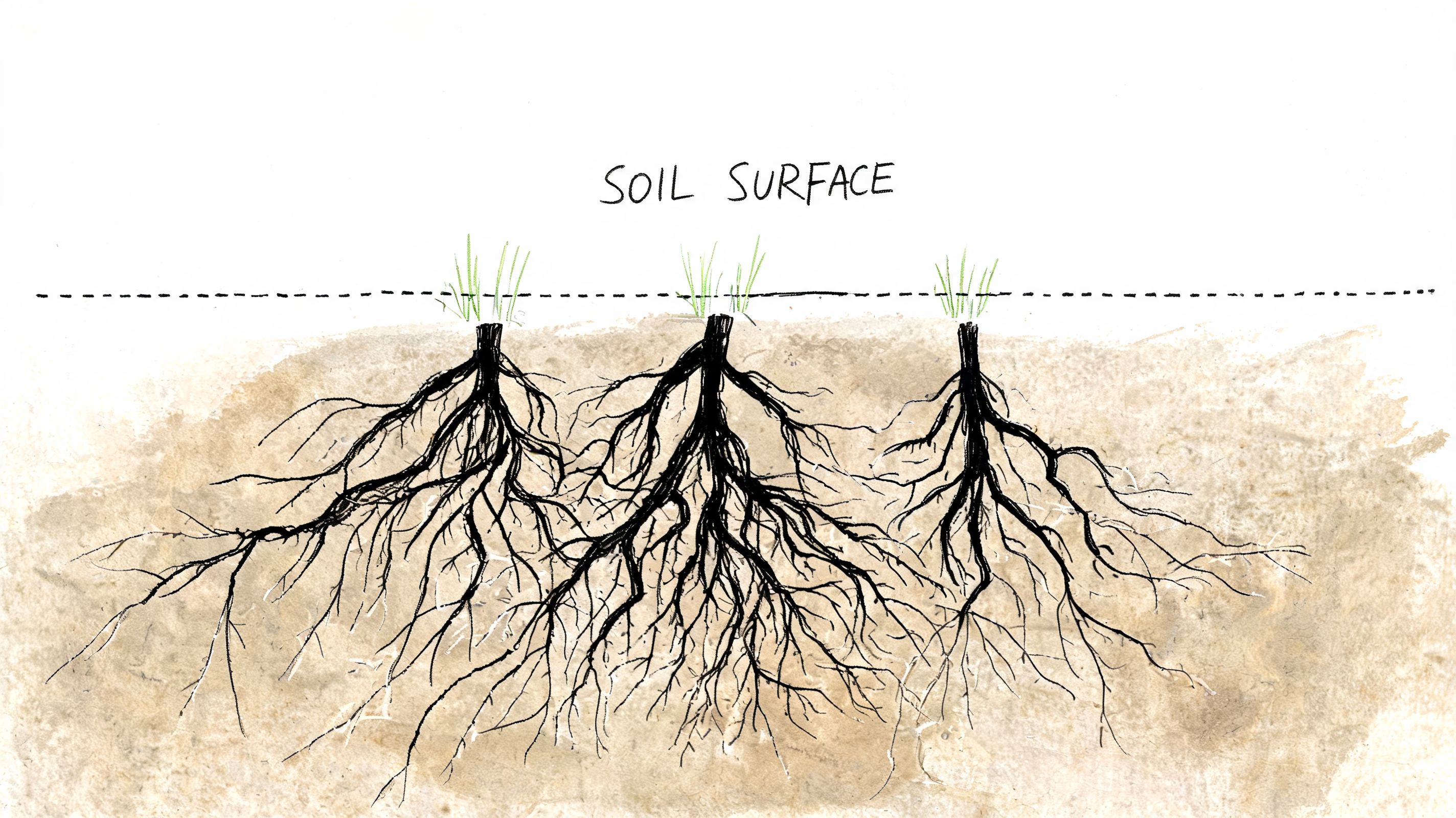
A properly timed late fall nitrogen application is one of the most useful feedings of the year for cool-season lawns. Purdue notes that lawns receiving proper late-fall nitrogen applications show earlier spring green-up, improved turf density, better tolerance to spring diseases such as red thread and pink patch, and reduced weed pressure. The same guidance also notes that this feeding promotes root development during cooler months, which supports better drought and heat tolerance the following season in Purdue's fall fertilization guidance.
Practical rule: Late fall fertilizer is for next spring's performance, not this week's color.
That's the mindset shift often overlooked. If you treat late fall lawn fertilizer like a final strategic feeding instead of a random end-of-season chore, your choices get clearer. You stop chasing a dark green look and start feeding for root strength, winter survival, and spring recovery.
How to Read Your Soil Test for Fall Needs
A soil test report can look more technical than it really is. For late fall, you don't need to understand everything on the page. You need to focus on a few numbers that drive smart fertilizer choices.
Start with the three numbers that matter most
Look for these first:
-
pH
This tells you how acidic or alkaline the soil is. It matters because if pH is too low, the lawn can't use nutrients efficiently. Ohio State notes that pH below 6.0 can reduce nitrogen uptake by 30% to 50%, which means part of your fertilizer can go to waste, as explained in this Ohio State discussion of late fall fertilization. -
Phosphorus, or P
Phosphorus helps root development, but many established lawns already have enough. That same Ohio State reference notes that many established lawns have phosphorus over 25 ppm, which makes high-phosphorus fertilizers unnecessary and environmentally harmful if you keep adding more. -
Potassium, or K
Potassium is the stress nutrient. In plain terms, it helps the grass handle cold, traffic, and disease pressure better. In late fall, this number often matters more than people think because it shapes whether you should lean toward a potassium-containing product.
If you don't have a soil report yet, start there before buying fertilizer. A good first step is learning where to get your soil tested.
A simple way to interpret the report
You don't need a perfect agronomy background to make a good fall decision. Use this simple filter:
| Soil test item | What it means for late fall |
|---|---|
| pH below 6.0 | Nitrogen use gets less efficient. Fixing pH belongs on your larger lawn plan. |
| P over 25 ppm | Skip phosphorus-heavy products unless your report specifically says otherwise. |
| K looks weak on the report | A fertilizer with potassium makes more sense than a generic high-N spring product. |
If your soil test says phosphorus is already high, a so-called winterizer with a big middle number is usually the wrong bag.
Here's a practical example. If your report shows pH below 6.0 and phosphorus over 25 ppm, the takeaway is straightforward. Don't pay extra for a fertilizer heavy in phosphorus, and don't expect perfect response from nitrogen until pH is addressed as part of your broader soil plan.
That kind of reading is what separates smart feeding from bag-driven feeding. The bag only tells you what's in the product. The soil test tells you whether your lawn needs it.
Choosing the Right Nutrients and Products
The bag that wins in late fall is usually not the one with the biggest “winterizer” label. It is the one that matches your soil report.
That matters because two lawns can need very different products at the same time of year. If one yard is already high in phosphorus, a fertilizer with a big middle number is wasted money. If another lawn tests low in potassium, a bag with some K makes a lot more sense than a generic high-nitrogen product.
What the bag numbers should look like
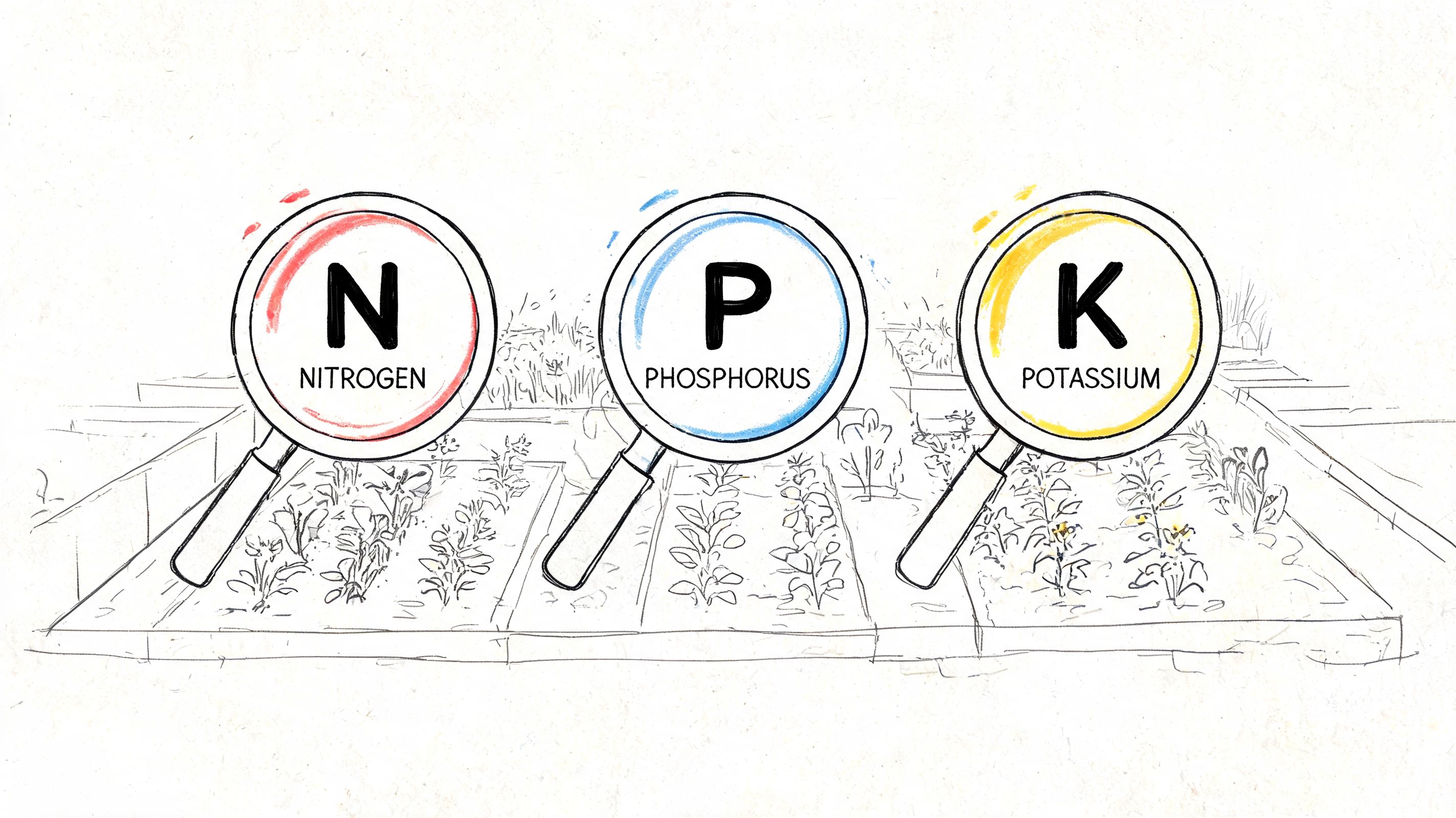
The three numbers on a fertilizer bag are N-P-K. They tell you the percentage of nitrogen, phosphorus, and potassium in the product.
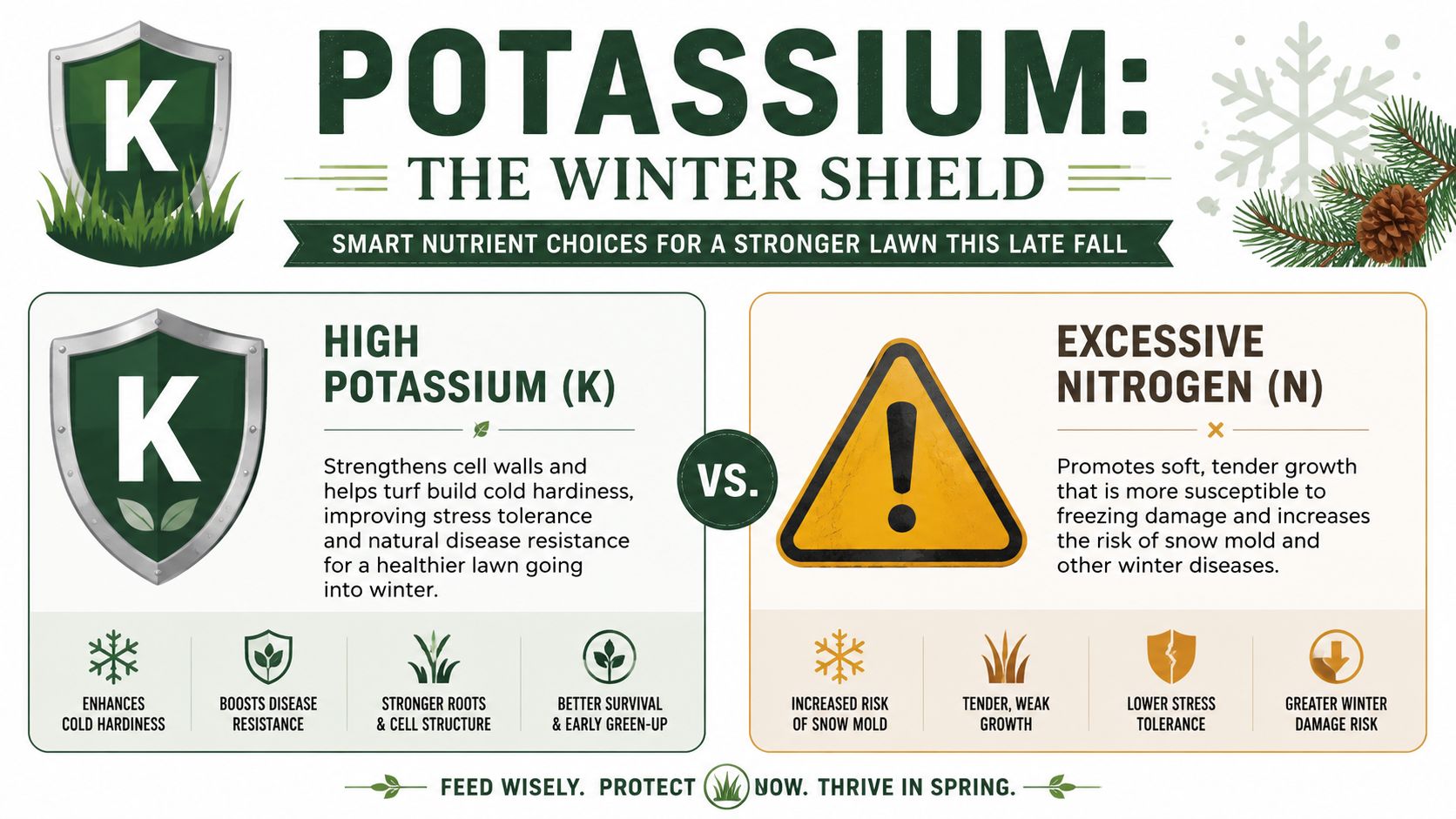
For late fall, start with nitrogen, then let your soil test decide the rest. Established cool-season lawns usually respond best to a product that supplies nitrogen without loading on phosphorus they do not need. If your phosphorus level is already above the sufficiency range from the previous section, skip the high-middle-number bags. Good fits often look like 15-0-15, 10-0-20, or another product with modest nitrogen, no or low phosphorus, and enough potassium to support stress tolerance.
The ratio matters, but the soil test matters more. A bag with a balanced-looking label can still be the wrong choice if your P and K numbers are already high. Homeowners overspend in this situation because they buy by slogan instead of by ppm.
If your potassium level came back low, choose a fertilizer that supplies enough K to move the needle. A close look at potassium fertilizer for lawns helps if you want to understand which products raise potassium without overapplying other nutrients.
Match the product to the numbers
A simple way to choose:
-
High P on the soil test
Use a product with little or no phosphorus. -
Low K on the soil test
Pick a fertilizer that includes potassium, not just straight nitrogen. -
P and K already in good shape
A mostly nitrogen product can be the better late fall buy.
This is also where rate math matters. A product can have the right analysis and still be applied at the wrong amount. For example, a 10-0-20 bag gives you twice as much potassium as nitrogen by weight. That can be useful on a low-K lawn, but it also means you need to calculate the application rate carefully if your goal is around 1 pound of nitrogen per 1,000 square feet. MySoilPlan is built for that kind of decision. It uses your lab numbers to sort out whether you need nitrogen only, an N-K blend, or a more targeted correction.
What to skip at the store
A few product types cause the most trouble:
-
High-phosphorus fertilizers without a soil test reason
Extra phosphorus does not help an established lawn that already tests high. -
“Winterizer” bags chosen only for the name
The front label sells the product. The analysis tells you whether it fits your yard. -
One-size-fits-all fall blends
They can be fine for one lawn and completely wrong for the next one.
I usually tell homeowners to buy the boring bag with the right numbers. That approach is less exciting in the aisle and a lot better for the lawn.
Your Step-by-Step Late Fall Application Plan
A good late fall application is usually pretty uneventful. The grass has slowed down, the soil is still open, and you put down exactly what the test says the lawn needs. No guessing. No “winterizer” bag picked by the front label. Just the right nutrients at the right rate.

Get the timing right first
The late fall window is narrower than people expect. You want the lawn to be done pushing much top growth but still active enough to take up nutrients through the roots.
Purdue turf specialists place that final nitrogen timing just before soil temperatures drop below about 40 to 45°F. Their guidance also points to about 1 lb of soluble nitrogen per 1,000 ft² for a late fall application, usually in October to early November, and warns that fertilizing after the ground freezes can waste a large share of the product through runoff or leaching in Purdue's late fall lawn guidance.
Three field signs help:
-
Top growth has clearly slowed
You are close to the last mow, or just past it. -
The lawn is still green
Green turf is still metabolically active, even if it is not growing fast. -
The soil is not frozen
If the surface is hard-frozen, save the bag for another season.
If you want a clean walkthrough for spreader setup, calibration, and coverage, this guide on the best way to fertilize a lawn fits well with a late fall application.
Run the rate math before you fill the spreader
This is the part that saves money and prevents nutrient imbalance.
Start with the nutrient target, then work backward from the fertilizer analysis. In many late fall plans, the nitrogen target is 1 lb of actual nitrogen per 1,000 sq ft. If your soil test also shows low potassium, use the same math to see how much K that product will deliver at the nitrogen rate. That check matters because the right bag can still be the wrong choice if it oversupplies one nutrient while you chase another.
Use this formula:
Product needed per 1,000 sq ft = target nutrient rate ÷ decimal form of the bag number
Example with 15-0-15:
- Nitrogen target = 1 lb per 1,000 sq ft
- Nitrogen analysis = 15%
- 1 ÷ 0.15 = 6.67 lbs of product per 1,000 sq ft
For a 5,000 sq ft lawn:
- 6.67 × 5 = 33.35 lbs of product total
That same application also delivers potassium, which may be helpful or excessive depending on your soil test. This represents the late fall trade-off. Homeowners who use their PPM numbers for phosphorus and potassium make better choices here than homeowners who buy by season alone.
Field check: Do the full calculation first, then round the final product amount.
Spread it like you want the lawn to look in spring
Even coverage matters as much as product choice.
Use a broadcast spreader and stick to a repeatable pattern:
-
Measure the lawn first
Square footage drives every rate calculation. Guessing usually leads to overapplication. -
Split the load into two passes
Apply half in one direction and the other half at a right angle. That smooths out light stripes and heavy bands. -
Apply to dry turf
Dry grass lets granules fall through the canopy more evenly. -
Keep fertilizer off driveways and sidewalks
Sweep or blow granules back onto the yard so they stay where they can be used.
I also like to check spreader settings on a small known area before covering the whole yard. A five-minute calibration check is a lot easier than explaining fertilizer stripes for the next month.
How MySoilPlan Turns Lab Numbers Into a Simple Plan
A soil test gives you the raw numbers. The hard part is turning those numbers into a plan you can follow without doing bag math on the garage floor.
What the tool does for you
MySoilPlan takes the parts homeowners usually struggle with and turns them into a usable schedule. You enter your lab values such as pH, phosphorus, potassium, organic matter, CEC, and lawn size. The tool then translates that into nutrient targets and season-by-season application guidance.
That matters in late fall because generic advice often breaks down then. One lawn may need nitrogen and potassium with no added phosphorus. Another may need a lighter approach because the soil already has enough of one nutrient or because the yard conditions make surge growth a bad idea.
Instead of forcing you to interpret every number manually, MySoilPlan helps by:
- Flagging what to raise so you can see the actual nutrient gaps
- Showing what to avoid so you don't keep applying phosphorus your lawn doesn't need
- Adapting to the fertilizer you choose so the application rate matches the product analysis
- Pacing applications by season so late fall fits into the rest of the year instead of becoming a one-off guess
The useful part isn't just calculation. It's translation. A lab report might tell you what's in the soil. A good plan tells you what to buy, how much to apply, and when to put it down.
Common Late Fall Fertilizing Mistakes to Avoid
Late fall mistakes usually come from guessing. A homeowner grabs a bag labeled “winterizer,” spreads it heavy because the lawn looks tired, and assumes more fertilizer means better spring green-up. That is how you waste money, push growth at the wrong time, and add nutrients the soil did not need in the first place.
The cleanest way to avoid that is to use the soil test you already have. Check the phosphorus and potassium levels in ppm, then match the product and rate to those numbers instead of the marketing on the front of the bag.
Mistakes that waste product
Some late fall errors will not wreck a lawn. They just produce a weak return on what you bought.
-
Applying after the soil has frozen
Granules need a workable soil surface and some moisture movement into the root zone. Once the ground is frozen, you have missed the useful window. -
Buying by bag claims instead of the fertilizer analysis “Winterizer” is not a nutrient. N-P-K numbers tell you what you are putting down.
-
Applying phosphorus without checking soil test ppm first
If your soil test already shows adequate or high phosphorus, another high-P application is usually unnecessary. It can also push your nutrient balance further out of line. -
Using one rate for every product
A pound of product is not a pound of nutrient. The bag analysis changes how much actual nitrogen, phosphorus, or potassium you are applying per 1,000 square feet.
Mistakes that create disease and runoff problems
The riskiest late fall applications are usually the aggressive ones.
Too much quick nitrogen late in the season can increase snow mold pressure, especially if the lawn goes into winter lush, dense, and wet. Poor drainage makes that worse. University turf programs regularly caution against heavy late-fall nitrogen on snow mold-prone sites, particularly where snow cover lingers.
Low potassium is a separate problem, but it should still be handled with the soil test in front of you. If your K ppm is low, the answer is to correct the deficiency with a measured application, not to throw down a random high-K bag and hope for the best. If your potassium is already in a good range, extra K will not buy you much.
A few practical rules keep lawns out of trouble:
-
Do not chase dark green color late in fall
The goal is nutrient storage, not a flush of top growth. -
Do not load wet, compacted soil with heavy nitrogen
That combination raises disease risk and lowers the chance the lawn uses the fertilizer well. -
Do not leave granules on driveways or sidewalks
Sweep them back onto the turf before irrigation or rain moves them into the street. -
Do not ignore spreader calibration
A slightly off setting can turn a reasonable plan into an overapplication fast.
A good late fall program is precise and usually pretty plain. Correct nutrient, correct rate, correct timing. That is exactly why a ppm-based plan works better than generic winterizer advice.