Low Maintenance Grass: The Homeowner's Guide for 2026
Most advice about low maintenance grass is lazy. It tells you to buy a certain seed, mow less, and hope for the best.
That's backward.
A lawn becomes low maintenance when the grass matches your soil, your climate, and how you use the yard. If you ignore any one of those, you don't get an easy lawn. You get a weak lawn that needs constant fixing.
If you want less mowing, less watering, and less fertilizer, start with the ground under your feet. Your soil test matters more than the marketing on a seed bag.
Table of Contents
- Your Lawn Could Be Less Work Than You Think
- What Low Maintenance Really Means for a Lawn
- Comparing the Best Low Maintenance Grasses
- Match Your Grass to Your Soil Test Results
- Your Season-by-Season Low-Input Action Plan
- Common Mistakes to Avoid With Your New Lawn
Your Lawn Could Be Less Work Than You Think
The hard truth is that lawn work usually stays hard because the grass is a bad match for the site. Homeowners keep blaming mowing, watering, or fertilizer costs when the actual problem is simpler. They planted a grass that does not fit the yard's light, traffic, and soil chemistry.
A lower-work lawn starts with fit. Fit the grass to the site. Fit the fertilizer plan to the soil test. Then stop chasing a perfect, high-input look that forces constant mowing, watering, and repair.
That last part gets missed in a lot of lawn advice. “Low maintenance” is not just about picking a slower-growing grass. It is also about choosing one that can live with your soil as it exists, or with a short list of targeted fixes after a soil test. If your test shows low phosphorus, high pH, or weak organic matter, the wrong grass will turn into a standing expense.
That matters on a national scale too. Analysts have noted that the standard American lawn model uses a lot of land, water, fuel, and chemical inputs. The point for your yard is practical, not philosophical. A lawn that needs constant correction is expensive because the setup is wrong.
Practical rule: A low maintenance lawn is a lawn that stays acceptable without frequent rescue.
That is the standard to use. If a grass only looks good when you keep adding water, nitrogen, and extra mow cycles, it is not low maintenance for your property. If it works with your soil test and needs fewer inputs to stay dense and healthy, you cut both the work and the bill.
What Low Maintenance Really Means for a Lawn
“Low maintenance” gets tossed around so much that it stops meaning anything. For homeowners, it should mean one thing: less routine work without the lawn falling apart.
The four things that actually reduce work
Start with these four filters.
- Less watering means the grass can handle ordinary dry periods without demanding frequent irrigation.
- Less fertilizing means it stays acceptable without heavy feeding or repeated nitrogen pushes.
- Less mowing means it grows slowly enough that you're not dragging out the mower every time the weather turns nice.
- Fewer pest and disease problems means the grass isn't constantly stressed by the site, which cuts down on preventable trouble.
Some grasses are naturally better at this because of how they grow. Slow top growth means fewer clippings and fewer mow cycles. Deeper or heavier root systems can help a lawn handle dry weather and stress better.
A simple test for whether a lawn is really low maintenance
A grass is only low maintenance if it still works when you stop pampering it.
Ask these questions before you buy seed or sod:
- Will it fit the light you have? Shade-tolerant grass in shade is smart. Sun-loving grass in shade is a headache.
- Will it fit the soil you have? Some grasses tolerate average soil. Others want acidic, low-nutrient soil and struggle outside that lane.
- Will it fit how you use the yard? A play area, dog run, and front-showpiece lawn are not the same job.
- Can you live with the look? Some low maintenance lawns are softer and more natural-looking. If you want a tight, heavily manicured look, you're asking for more work.
If your idea of success requires constant irrigation, short mowing, and frequent fertilizing, you don't want a low maintenance grass. You want a high-input lawn with better marketing.
That's fine if it's intentional. It's not fine if your goal is to save time and money.
Comparing the Best Low Maintenance Grasses
A grass is only "low maintenance" if it stays that way in your soil. That rules out a lot of popular recommendations.
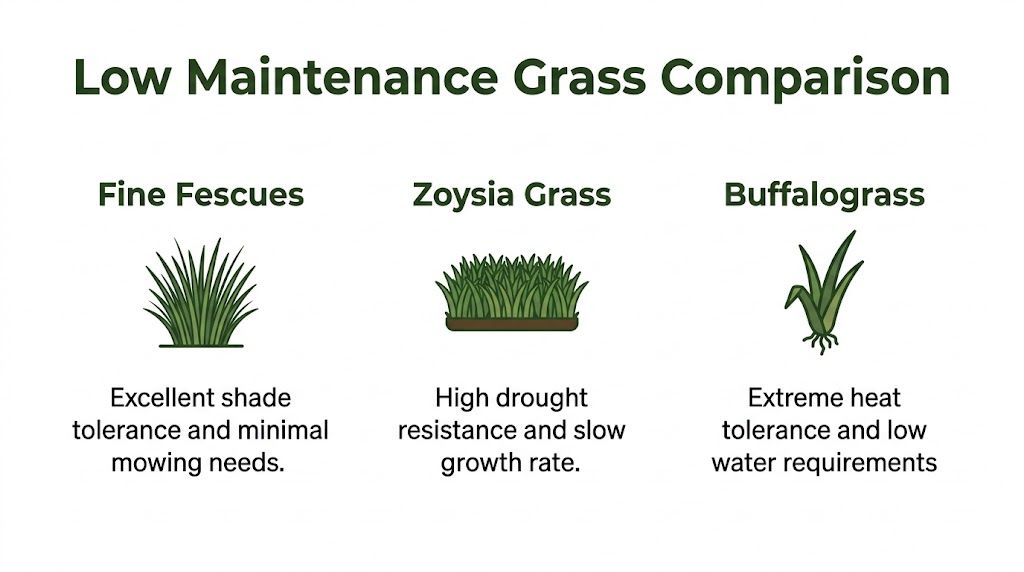
For most home lawns, the short list is fine fescues, turf-type tall fescue, buffalograss, and, in the right warm-season soils, centipedegrass. The right pick depends less on marketing labels and more on how that grass handles your pH, nutrient levels, drainage, and climate without constant correction.
Fine fescues
Fine fescues are one of the best choices for a cool-season lawn that you do not want to babysit. They handle leaner soil, lighter feeding, and less mowing better than high-input grasses grown for a dark, heavily fertilized look.
Prairie guidance for fine-fescue no-mow mixes also notes that they perform best in well-drained, drier, sandy, or rocky soils with low nitrogen and need little to no fertilizer in the right setting, as described in this fine fescue fact sheet.
Best fit:
- Cool-season lawns
- Lower-fertility soils
- Well-drained sites
- Homeowners who are fine with a softer, more natural look
Weak spots:
- Heavy traffic wears it down.
- Rich, heavily irrigated sites push growth and reduce the low-maintenance advantage.
Turf type tall fescue
Turf-type tall fescue is the practical pick for homeowners who still want a conventional lawn look without a high-input routine.
Its deep root system helps it hold up better in dry spells than shallower-rooted cool-season options. It also gets by with less fertilizer than lawns that depend on frequent nitrogen to stay attractive. If your soil test shows average fertility and you want fewer feeding demands without giving up durability, start here.
Best fit:
- Cool-season regions
- Yards that need better drought tolerance
- Homeowners who want a familiar lawn appearance
- Soils where you want moderate input, not constant correction
Weak spots:
- It still needs proper mowing height and good establishment.
- It is lower maintenance, not no maintenance.
Buffalograss
Buffalograss is the right call for hot, sunny yards where water use is the main problem.
It grows slowly, needs less mowing, and fits homeowners who care more about cutting irrigation and fertilizer than chasing a perfect show-lawn finish. It is a strong choice for lean soils and low-input management, but only if the site gets full sun and you can live with a less formal appearance.
Best fit:
- Sunny sites
- Dry climates
- Low-irrigation goals
- Homeowners willing to mow higher and less often
Weak spots:
- Slow establishment
- Weak shade performance
- Not the grass for a tightly clipped, manicured look
Centipedegrass
Centipedegrass is the grass that proves soil chemistry matters.
It performs best in acidic, low-fertility, well-drained soil and usually needs less fertilizer than many other warm-season lawns when it is planted in that lane. Put it in alkaline soil or push it with extra nutrients, and the "easy lawn" pitch falls apart fast. It also handles only low to moderate foot traffic, so save it for yards that are used lightly.
Best fit:
- Warm-season lawns
- Acidic soil
- Low-fertility sites
- Low-input lawns with moderate use
Weak spots:
- Alkaline soil creates ongoing problems.
- Heavy wear thins it out.
Quick comparison
| Grass type | Climate fit | Water demand | Fertility demand | Mowing need | Soil fit |
|---|---|---|---|---|---|
| Fine fescues | Cool-season | Low to moderate | Low | Low | Best in lower-fertility, well-drained soils |
| Turf-type tall fescue | Cool-season | Moderate | Moderate to low | Moderate | Broad fit, especially where drought tolerance matters |
| Buffalograss | Warm, dry, sunny settings | Low | Low | Low | Best in full sun and leaner soils |
| Centipedegrass | Warm-season | Low to moderate | Low | Low to moderate | Best in acidic, low-nutrient soil |
If you want the lowest ongoing workload, do not stop at this table. Use it with your soil test. A grass that needs less mowing but fights your pH or nutrient profile will still cost you time and money.
Match Your Grass to Your Soil Test Results
Picking a grass by the bag photo is how homeowners turn a "low maintenance" lawn into a fertilizer project.
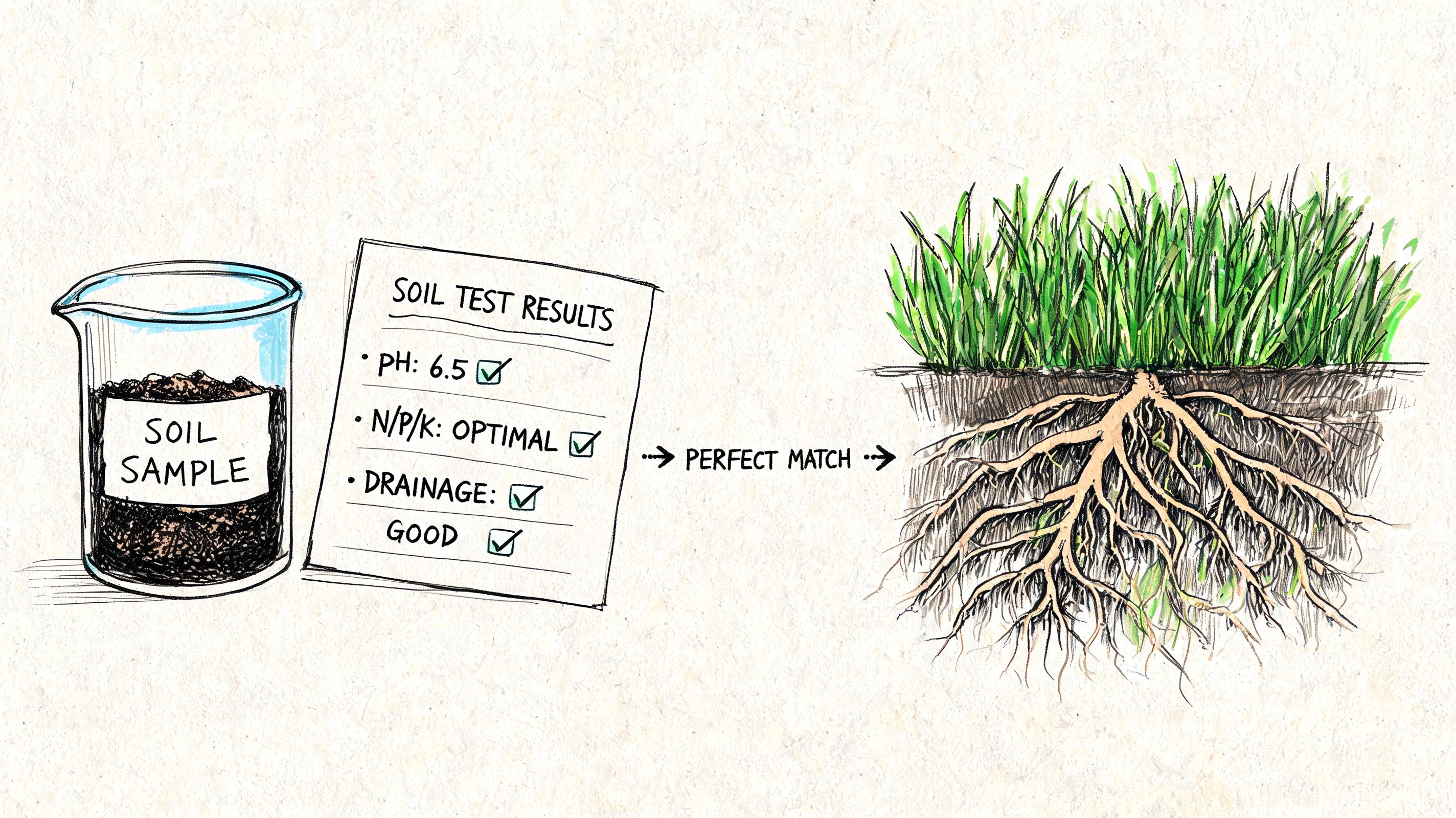
The right question is simple. Which grass will stay low-work in your soil, with your pH, and with the nutrients you already have?
Why soil chemistry decides whether a lawn stays easy
Low mowing is only part of the job. Fertilizer demand matters just as much, and your soil test is what separates a low-input lawn from one that keeps asking for correction.
Here is the mistake I see all the time. A homeowner hears that a grass is "easy," plants it in the wrong pH range, then spends the next few years chasing color and density with extra products. That is not a grass problem. It is a matching problem.
Centipedegrass is the clearest example. In acidic, low-fertility soil, it can stay lean and manageable. In alkaline soil, it turns into work. The same pattern shows up with other grasses too. A broad-adapted grass can tolerate more soil conditions with fewer interventions. A pickier grass only stays cheap if the site already fits it.
A low maintenance lawn starts with a grass that fits your soil test, not a grass that sounds easy on the label.
How to read a soil test for grass selection
Ignore the noise and focus on the numbers that affect ongoing inputs.
Check these first:
- pH: This is your first filter. Some grasses handle a wide range. Others need a narrower range to stay healthy without repeated adjustment.
- Phosphorus and potassium: If your test already shows adequate levels, choose a grass that does not need heavy feeding to maintain color and coverage.
- Organic matter and general fertility: Lean soils pair better with grasses that are naturally lower feeders. Richer soils give you more flexibility, but they can also push excess top growth if you overfertilize.
- Drainage and compaction from the site itself: A lab sheet will not tell you everything. If water sits after rain or the soil is hard as brick, factor that in before you pick a species.
Use this field shortcut:
- Cool-season lawn, mixed conditions, safest pick: go with turf-type tall fescue.
- Cool-season lawn, lean soil, lighter-input goal, less formal appearance: use fine fescues.
- Warm, sunny, drier site where irrigation is limited: choose buffalograss.
- Warm-season region, acidic soil, naturally low fertility: centipedegrass makes sense.
That is the angle most guides miss. The best low maintenance grass is not just the one that grows slowly. It is the one that asks the least from the soil you already have.
A quick pH example
Say your soil test comes back at pH 7.8.
Do not plant centipedegrass and hope it sorts itself out. It will not. High pH makes that choice harder to manage, more expensive to feed, and more likely to show weak color and nutrient stress.
A grass with broader soil tolerance is the smarter call for that site, assuming the climate fits. You want the grass that cooperates with your soil chemistry, not the one that forces you into repeated amendments.
If you want help turning soil test numbers into a practical fertilizer plan, MySoilPlan can translate lab results into nutrient targets, application rates, and timing by season.
Your Season-by-Season Low-Input Action Plan
Pick the right grass, then stop treating every lawn like a high-input Kentucky bluegrass project. That is how you cut work, water, and fertilizer without ending up with a thin, tired yard.
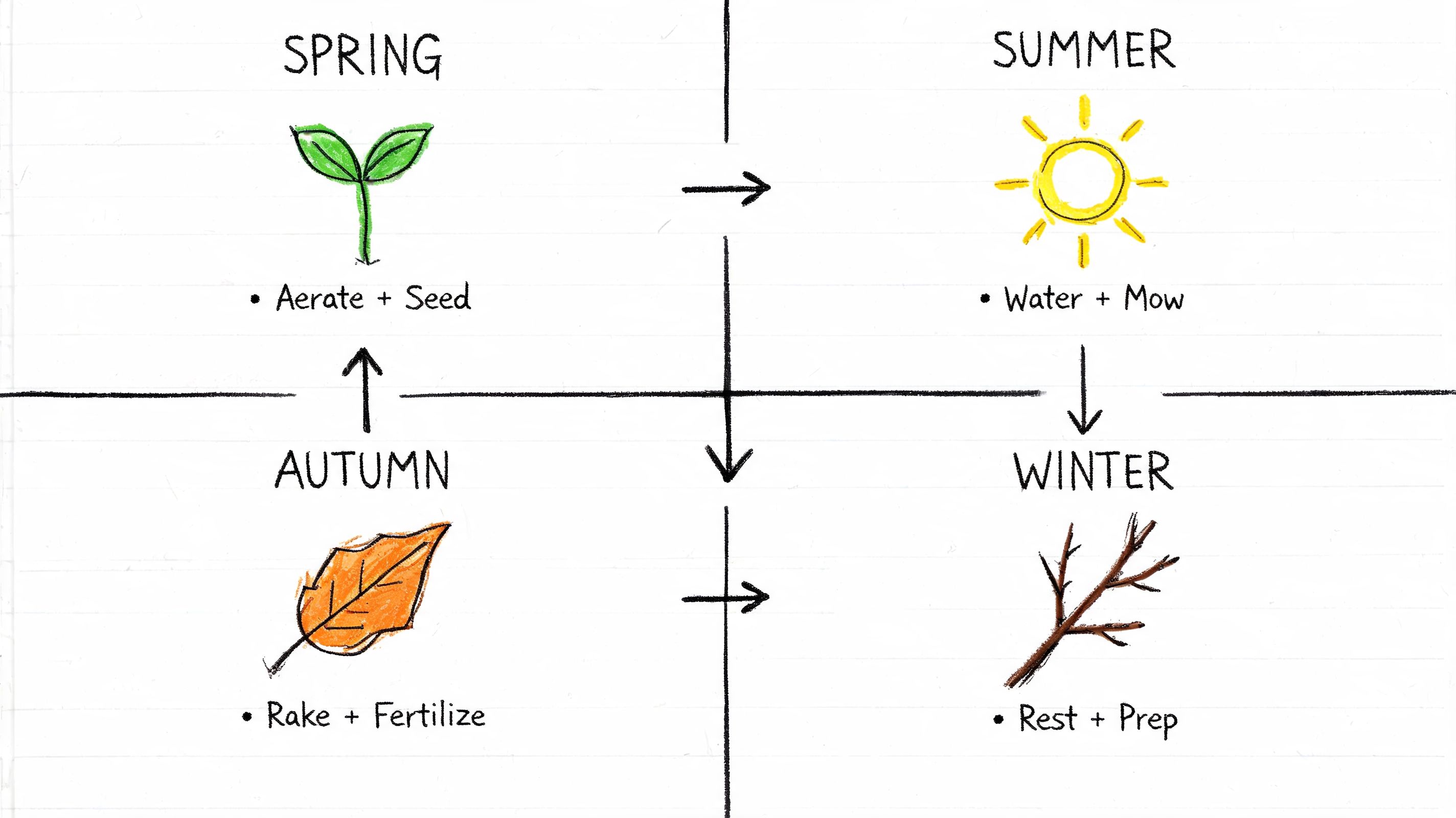
Your soil test should set the pace for this plan. If phosphorus and potassium are already adequate, skip the habit of blanket feeding. If pH is a poor match for the grass, fix the grass choice first, not the symptom later with extra products.
Planting or overseeding
Establishment decides how much work you create for yourself later.
Cool-season lawns do best when seeded in the proper window for rooting and recovery. Warm-season lawns need planting during active growth, not during cool weather when they sit still and struggle. Either way, the prep work matters more than fancy inputs.
Use these rules:
- Kill or remove competition first. Seeding into weeds wastes seed and invites patchy fill-in.
- Open up the surface. Seed needs contact with soil, not a layer of dead stems.
- Spread seed evenly. Thin spots turn into weed openings.
- Keep the surface consistently moist until seedlings root in. After that, reduce frequency and push roots deeper.
For grass choice, keep it simple:
- Fine fescues fit low-fertility cool-season sites.
- Turf-type tall fescue suits cool-season lawns that still need decent wear tolerance.
- Buffalograss works for sunny warm-season sites where water is limited.
- Centipedegrass only belongs where the region and soil chemistry fit.
Spring
Spring is for cleanup, assessment, and restraint.
Rake out winter debris. Fix obvious bare spots. Check whether the lawn needs seed, or whether it just needs warmer weather and a sharper mowing routine. If your soil test showed adequate nutrients, do not rush out with a full fertilizer program because the calendar says spring.
Focus on three jobs:
- Mow at the proper height early and stay consistent.
- Water only if establishment or drought conditions justify it.
- Spot-fix weak areas instead of treating the whole lawn like a problem.
Summer
Summer is where overmanagement causes the most damage.
Water thoroughly and less often once the lawn is established. Frequent light watering keeps roots shallow and makes the lawn more dependent on you. Taller mowing also helps the lawn hold up better in heat, so keep most low-input lawns in the higher end of their mowing range instead of chasing a short, manicured look.
Keep summer simple:
- Do not scalp.
- Do not push heavy nitrogen in heat.
- Do not panic over slower growth.
Low-input grass is supposed to grow less aggressively. That is a benefit, not a problem to correct.
Fall
For cool-season lawns, fall is the money season.
This is the best time to seed, overseed, and make your main nitrogen application if your soil test and grass type call for one. Growth conditions are usually better, weed pressure is lower than in spring, and the lawn can build density without as much stress.
If you are growing turf-type tall fescue, prioritize fall feeding over spring feeding. If you are growing fine fescue on soil that already tests adequate, stay conservative. Extra nitrogen buys more mowing and softer growth, which is the opposite of the goal.
Winter
Winter is mostly about staying out of the lawn's way.
Avoid unnecessary traffic on wet or frozen turf. Service the mower. Review your soil test and your notes from the year. If the lawn needed repeated feeding to stay acceptable, the issue may be the grass-soil match, not a missing product.
Watering
The target is root depth and survival, not constant green-up.
Use this approach:
- New seed needs light, frequent watering until it establishes.
- Established lawns should be watered less often and more thoroughly.
- Dry periods call for enough water to limit stress if you want to preserve the lawn, not daily sprinkling to force lush growth.
Mowing height matters here too. Keeping the lawn taller helps shade the soil and reduces stress during dry weather. As noted earlier, higher mowing is part of the low-input system.
Mowing
Mowing is one of the cheapest ways to reduce lawn stress.
Keep the lawn on the taller side for the species you planted. Cut often enough that you are not removing a huge share of the blade at once. Sharp blades matter. Dull blades tear tissue, slow recovery, and make the lawn look rough even when the grass is healthy.
Stick with these habits:
- Avoid short mowing.
- Stay consistent during active growth.
- Accept a slightly taller, more natural finish.
That look saves work. It also supports the lower-water, lower-fertilizer plan you picked this grass for in the first place.
Fertilizing based on the grass you chose
Your soil test pays off here.
If the report shows phosphorus and potassium are already in range, stop buying fertilizers that add them out of habit. Match the product to the deficiency, or skip the application. A low-maintenance lawn gets expensive fast when you keep feeding nutrients the soil does not need.
A lower-input plan should change by grass type:
-
Fine fescues
- Use a light nitrogen program.
- Skip routine feeding if the lawn is performing well and the soil test is adequate.
- Too much nitrogen creates extra top growth and more mowing.
-
Turf-type tall fescue
- A modest annual nitrogen program usually works well.
- One or two applications are enough for a true low-input approach, with fall as the priority.
-
Buffalograss and other low-input warm-season grasses
- Keep nitrogen restrained.
- Heavy feeding pushes growth you were trying to avoid.
-
Centipedegrass
- Keep fertility modest.
- If pH or soil conditions are wrong, fertilizer will not fix the mismatch.
Worked example for a tall fescue lawn
Here is the math in plain English.
You have a 4,000 sq ft lawn planted with turf-type tall fescue. Your soil test shows phosphorus and potassium are adequate, so nitrogen is the only nutrient you need to plan around.
A low-input target is 1 lb of nitrogen per 1,000 sq ft for the year. On 4,000 sq ft, that equals 4 lbs of actual nitrogen annually.
If your fertilizer is 24-0-11, it contains 24% nitrogen. To apply 1 lb of nitrogen per 1,000 sq ft, divide 1 by 0.24. That gives you about 4.1 lbs of product per 1,000 sq ft.
For the full lawn:
- Rate per 1,000 sq ft: about 4.1 lbs of product
- Total product for 4,000 sq ft: about 16.4 lbs
- Timing: apply in fall for the simplest plan, or split it into two lighter applications if the lawn needs steadier growth
That is the whole idea. Let the soil test set the fertilizer plan, and let the grass choice set your expectations. A lawn becomes low maintenance when the species, the soil chemistry, and the schedule all fit each other.
Common Mistakes to Avoid With Your New Lawn
Low maintenance grass fails for predictable reasons. Usually, the homeowner means well and then slips back into high-input habits.
Doing too much after choosing a low-input grass
The most common mistake is over-managing a grass that was chosen specifically to need less.
Watch for these problems:
-
Overwatering
People see a dry week and panic. Constant light watering trains roots to stay shallow and can increase stress instead of reducing it.
Do this instead: Water new seed carefully during establishment, then back off and let the lawn root deeper. -
Mowing too short
Homeowners still scalp low-input lawns because they want that ultra-short look. That usually creates thinner turf and more weed pressure.
Do this instead: Keep the lawn taller and accept a more natural finish. -
Using the old fertilizer routine
This is a big one. If you pick fine fescue or tall fescue for lower input, then keep applying heavy fertilizer on the old schedule, you've missed the point.
Do this instead: Let the soil test set the rate. If nutrients are adequate, hold back.
A lawn doesn't become “better” just because you're doing more to it.
Expecting instant perfection
Low-input lawns often fill in and mature on a different timetable than heavily pushed turf. That doesn't mean they're failing.
A few more mistakes to avoid:
-
Giving up too early
Some grasses establish more slowly.
Do this instead: Judge progress over a season, not over a weekend. -
Choosing by label instead of by site
“Low maintenance” printed on the package doesn't mean it matches your yard.
Do this instead: Filter every option through sun, traffic, drainage, and soil chemistry. -
Trying to force a luxury-lawn look from a low-input system
You can absolutely have an attractive lawn with less work. But if you demand maximum density, deep color, and constant lush growth all at once, that requires more input.
Do this instead: Decide what matters most. If your priority is less work and lower cost, stop chasing perfection.
A good low maintenance grass plan is simple. Match the grass to the site. Use the soil test before you fertilize. Mow high. Water less often. Stay out of your own way.