 Soil
Soil
Organic Potting Mix Soil: A Simple Homeowner's Guide
You're standing in the garden aisle, looking at bags that all seem to promise the same thing. Potting soil. Potting mix. Organic potting mix soil. Moisture control. Indoor blend. Container blend. Seed starter.
It's easy to assume they're all just dirt in different bags. They aren't.
If you grow plants in pots, the mix you choose affects how often you water, how well roots breathe, how long nutrients last, and whether your plant slowly declines for reasons that seem mysterious but usually aren't. Once you understand what each ingredient is doing, the bags stop looking random. You can pick the right one for a fern, a tomato, or a succulent with a lot more confidence. You can even make your own.
Table of Contents
- What Is Organic Potting Mix Soil
- Understanding the Different Bags of Dirt
- Whats Actually Inside the Bag
- How to Match the Mix to the Plant
- Make Your Own Custom Potting Mix
- Nutrients Fertilizers and Long-Term Care
- Common Problems and Sustainable Choices
What Is Organic Potting Mix Soil
Organic potting mix soil is not regular backyard soil scooped into a bag. It's a container-growing medium made from ingredients that work together to manage water, air, and nutrients in a pot.
That wording matters. In a container, roots live in a very different environment than they do in the ground. Water moves differently. Heat builds faster. Air space disappears if the mix gets too dense. A good potting mix is built to handle those problems.
Organic mixes usually rely on natural ingredients and slower nutrient release instead of fast synthetic feeding. That doesn't make them magical. It just means the mix is designed to support plant growth through ingredients like compost, plant-based materials, and mineral amendments rather than quick synthetic fertilizers.
A helpful way to think about it is this:
Practical rule: A potting mix is a recipe, not a pile of dirt.
That recipe has jobs to do:
- Hold enough water so roots don't dry out too fast
- Drain extra water so roots don't sit in soggy conditions
- Leave air pockets so roots can breathe
- Provide or support nutrients so the plant can keep growing
- Stay loose enough that the pot doesn't turn into a hard brick
When people get frustrated with potted plants, the problem often starts here. They blame sunlight, watering, or fertilizer first. Sometimes the actual issue is that the mix was wrong for the plant from day one.
If you remember one thing, remember this. The right mix depends on the plant's needs. A cactus, a fern, and a tomato do not want the same root environment, even if they're all growing in pots on the same patio.
Understanding the Different Bags of Dirt
Most confusion starts because bag labels sound similar. Garden soil, potting soil, and soilless mix get used almost like they mean the same thing. They don't.
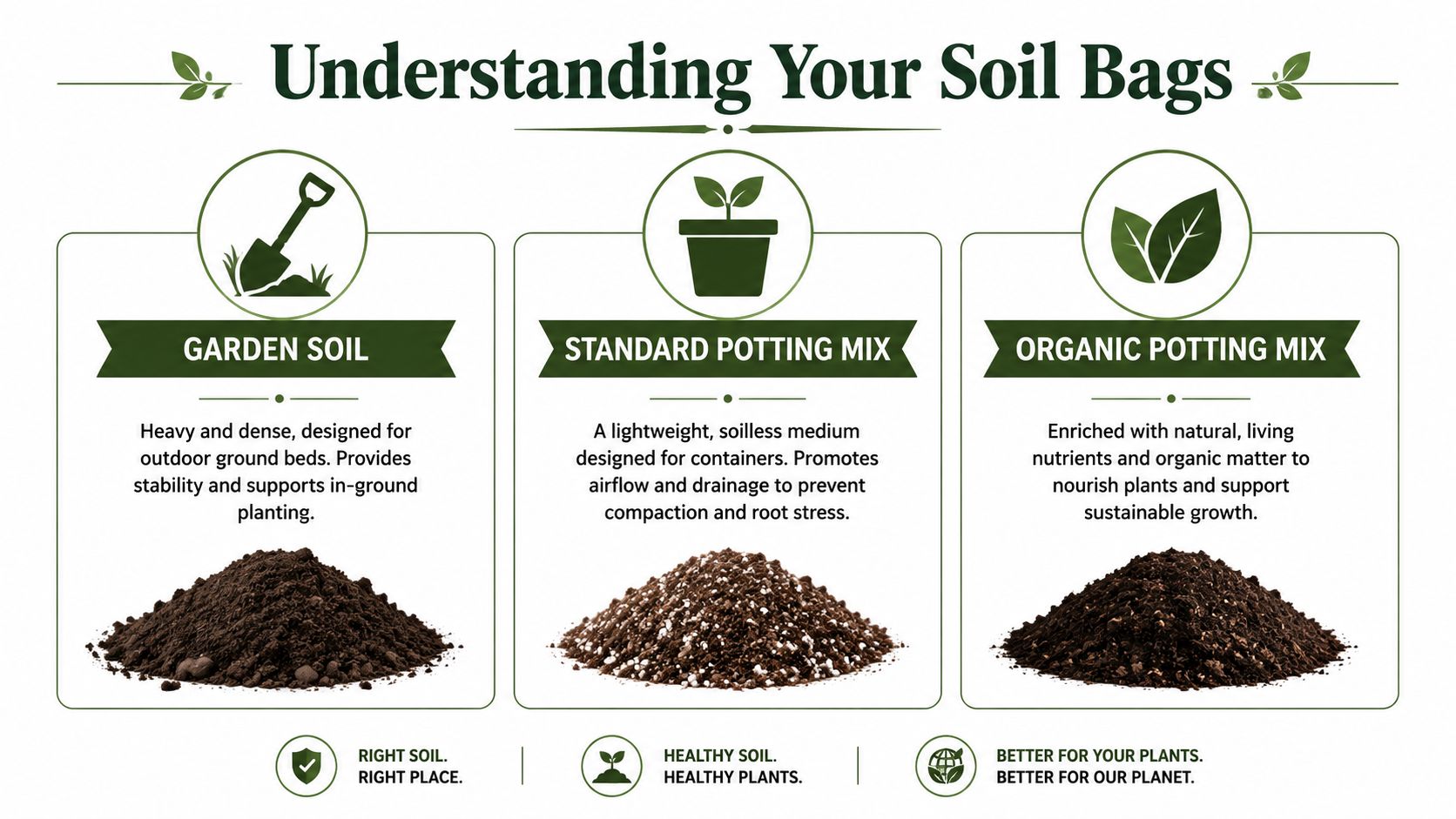
The clearest way to sort it out is to ask one question. What problem am I trying to solve? Guidance from the University of Saskatchewan notes that soilless mixes are usually lighter, more sterile, and better drained than garden soil, which helps reduce compaction and disease pressure, but they also often contain little or no inherent fertility. That's why the choice ultimately concerns drainage, disease risk, container weight, and nutrient supply, not just whether a bag sounds “better” than another in this soil versus soilless mix guide.
Garden soil
Garden soil belongs in the ground, not in containers.
It's heavier and denser. In a raised bed or garden bed, that can be fine because roots have a huge area to spread into and natural soil structure helps water move downward and outward. In a pot, that same heaviness can pack down and stay wet too long.
If you put garden soil into a container, you often get:
- Compaction problems where roots struggle to expand
- Drainage trouble because water moves slowly
- More pest or disease risk than you want in a container setup
Potting soil or potting mix
Most bagged potting products are really soilless mixes. They may not contain much, if any, mineral soil at all.
That's a good thing for containers. These mixes are usually made to stay lighter, drain better, and hold enough air for roots. If a bag says “potting soil,” many shoppers picture dark outdoor earth. What they're usually buying is a designed growing medium.
Here's the simple use case:
- Use potting mix for containers
- Use garden soil for in-ground beds
- Don't swap them unless the label clearly says you can
Where organic potting mix fits
Organic potting mix soil is still a container mix. The difference is mostly in the ingredient philosophy and nutrient style.
It typically uses natural inputs and slower-release fertility. That can appeal to gardeners who want a more natural feeding approach or who prefer mixes built around compost and organic amendments.
A fast decision guide helps:
| Bag type | Best use | Main strength | Common mistake |
|---|---|---|---|
| Garden soil | In-ground beds | Heavier outdoor use | Putting it in pots |
| Standard potting mix | Most containers | Lightweight and good drainage | Assuming it feeds plants for a long time |
| Organic potting mix soil | Containers when you want natural inputs | Slow, steady support and organic ingredients | Assuming “organic” means no further care needed |
If the plant is growing in a pot, start by looking at potting mixes first, not anything labeled for garden beds.
Whats Actually Inside the Bag
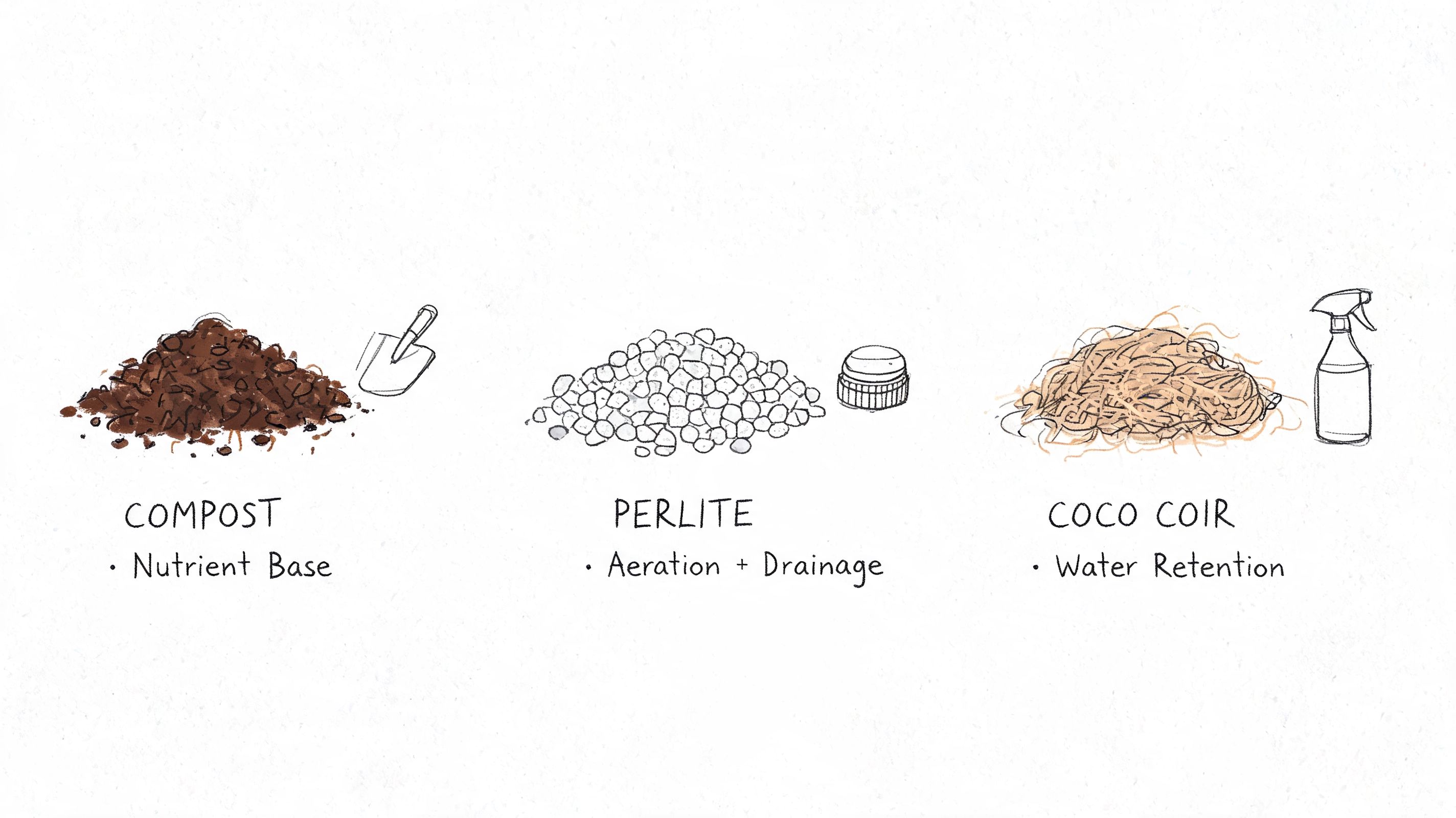
A good mix works like a team. One ingredient holds moisture. Another opens up air space. Another brings some nutrition. Once you see those roles, ingredient lists stop looking like gardening jargon.
The base holds water and gives roots a home
Most organic potting mix soil starts with a base material such as peat moss or coir.
This part does the quiet work. It gives the mix body and helps hold moisture around roots. If you've ever had a pot dry out far too fast, there may not have been enough of this moisture-holding part in the blend.
For seed starting, extension guidance from eOrganic notes that a representative organic mix uses 50–75% sphagnum peat and 25–50% vermiculite plus dolomitic lime and small amounts of blood meal, rock phosphate, and greensand. The same guidance explains the reason behind the formula. More peat or coir raises water-holding capacity, while more perlite or vermiculite increases aeration and reduces compaction risk in this organic potting mix basics resource.
That's the key idea. Ingredients aren't there because they sound good on a label. They change how the mix behaves.
The air spaces keep roots alive
Roots need oxygen as much as they need water. That surprises a lot of new plant owners.
Perlite, pumice, and sometimes rice hulls or bark help create air space. These ingredients keep the mix from collapsing into a dense mass after repeated watering. They also improve drainage.
If a plant likes sharp drainage, this part of the team needs to do more of the work. Succulents are the obvious example. They hate sitting in a heavy, wet mix. A dense blend around a succulent root ball is one of the fastest ways to cause rot.
A moisture-loving tropical houseplant is different. It still needs air at the root zone, but it usually wants a mix that holds moisture longer. So the balance shifts.
The feeding ingredients do the slow work
Compost, worm castings, and other organic amendments help with nutrition and biology.
These are the “feeders” in the mix. They usually don't create the fast burst of top growth people associate with synthetic fertilizers. Instead, they support slower nutrient release over time.
A quick way to read a label is to group ingredients by job:
- Structure and moisture like peat or coir
- Aeration and drainage like perlite or similar coarse particles
- Nutrition like compost or castings
- pH support like lime
If you pick up a bag and mostly see moisture-holding ingredients with very little coarse material, expect slower drying and lower drainage. If you see lots of chunky, airy material, expect faster drainage and more frequent watering.
That's why one “organic potting mix soil” can be perfect for herbs and frustrating for a fern. The label is only useful if you know what each ingredient is doing.
How to Match the Mix to the Plant
The easiest mistake is buying one bag and using it for everything. That works sometimes, but it's not the best way to set plants up well.
A better approach is to match the mix to how the plant naturally wants to live. Think less about brand names and more about the root conditions your plant prefers.
Think about the plant's natural habits
A succulent wants the mix to dry fairly quickly. Its roots do better when water moves through fast and air stays available. So you want a blend with more drainage material and fewer ingredients that stay soggy.
A fern wants almost the opposite. It likes steady moisture and a root zone that doesn't swing from soaked to bone dry in a day. So you want more moisture-holding base material while still keeping enough air space.
Vegetables and flowering annuals sit in the middle, but with one extra demand. They use nutrients faster because they grow fast and often produce fruit or flowers. For them, a mix with some real feeding capacity makes life easier.
Here's a simple way to think through common plant types:
- Succulents and cacti need a lighter hand with compost and more drainage support
- Leafy tropical houseplants usually prefer a mix that holds moisture longer
- Herbs often do well in a balanced, well-drained blend
- Vegetables and patio containers benefit from a mix that includes some steady nutrition
- Seedlings need a finer, lighter blend than established plants
The plant tells you what the mix should do. Dry fast, stay evenly moist, or feed steadily.
A simple buying checklist
When you're reading a bag in the store, ask these questions:
-
Will this plant hate wet feet?
If yes, look for more coarse ingredients and better drainage. -
Does this plant wilt fast in dry conditions?
If yes, look for more moisture-holding materials like peat or coir. -
Is this plant a heavy feeder?
Tomatoes, peppers, and flowering annuals often want more ongoing nutrition than a simple foliage plant. -
Am I starting seeds or potting up a larger plant?
Seedlings need a finer texture. Mature plants can handle a coarser mix.
A quick example helps. If you're choosing for two porch pots, one with basil and one with a jade plant, don't treat them the same. Basil wants even moisture and regular feeding. Jade wants a faster-draining root zone and less lingering dampness.
That one choice can save you a season of guessing.
Make Your Own Custom Potting Mix
Making your own mix sounds harder than it is. You don't need lab equipment or exact weights. You just need to think in parts.
How the parts system works
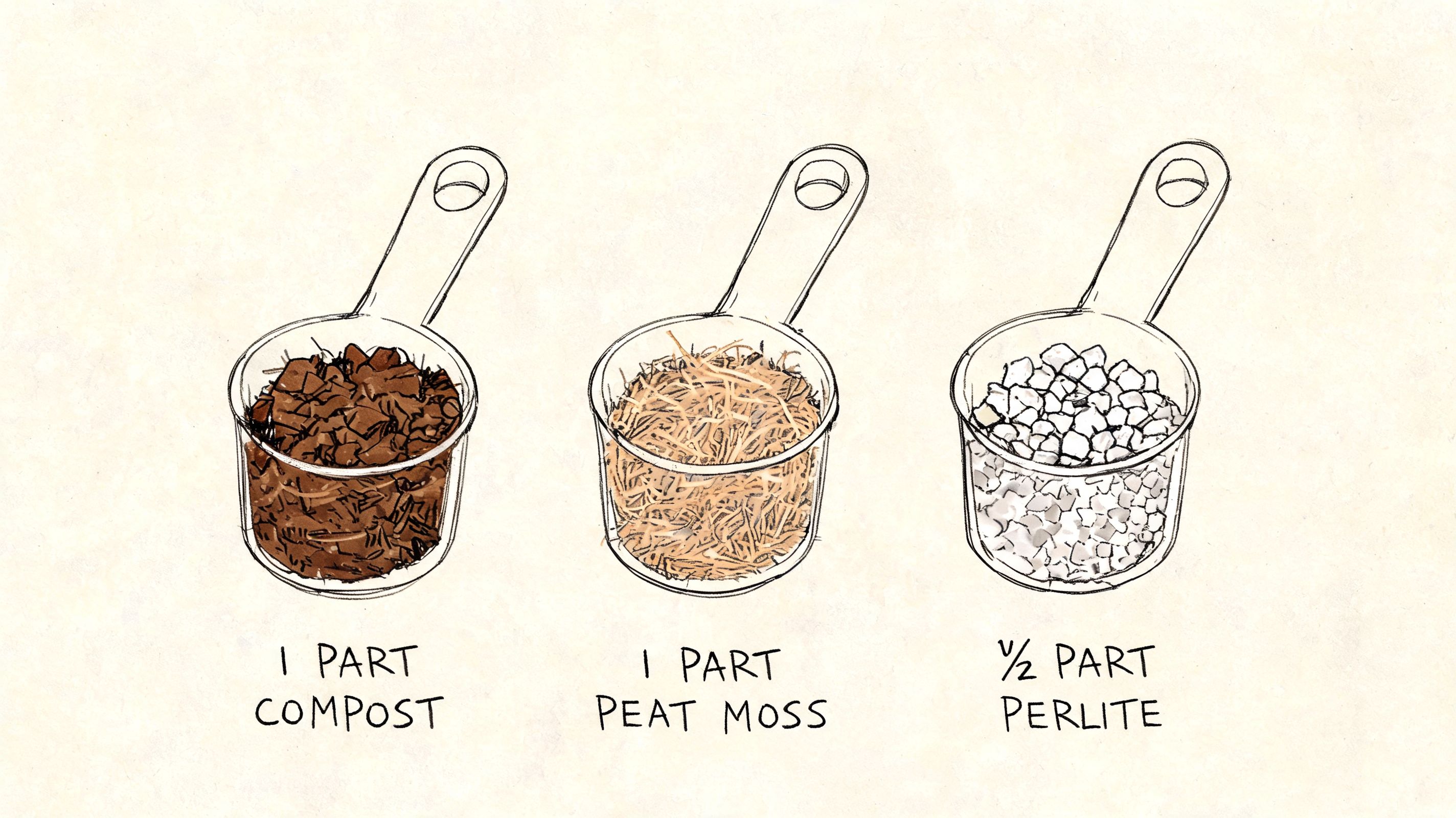
A “part” can be any container you use consistently. A scoop, a nursery pot, a bucket, or a bowl all work.
If your recipe says 2 parts coir, 1 part compost, and 1 part perlite, that could mean:
- 2 scoops coir
- 1 scoop compost
- 1 scoop perlite
Or:
- 2 buckets coir
- 1 bucket compost
- 1 bucket perlite
The size doesn't matter. The ratio does.
University of Vermont guidance says organic potting mixes are typically made with 20% to 50% compost by volume, depending on crop type, and notes that compost contributes slow-release nutrients and improves biological conditions but is rarely used alone because pure compost can have poorer water-holding properties and potentially higher soluble salts than ideal in this potting mix fact sheet.
That gives you a solid guardrail. Compost is useful, but more is not always better.
Three beginner recipes
These are simple starting points, not rigid laws. Adjust them based on how fast your pots dry and what you're growing.
All-purpose organic potting mix soil
Use this for many herbs, flowers, and general container plants.
- 2 parts peat or coir
- 1 part compost
- 1 part perlite
This lands near the lower-middle compost range and usually gives a good balance of moisture retention, drainage, and steady feeding.
Succulent and cacti mix
Use this when fast drainage matters more than extra fertility.
- 2 parts peat or coir
- 1 part perlite
- 1 part coarse mineral or extra aeration material
- small amount compost, if desired
Keep the compost modest here. These plants are more likely to struggle from slow drying than from a lack of rich organic matter.
Seed-starting mix
Use this for germination and tiny seedlings.
- 3 parts peat or coir
- 1 to 2 parts vermiculite
- small amount dolomitic lime if needed for pH balance
This type of mix should feel light, fine, and easy for tender roots to move through.
A practical example makes the parts system easy. If you want to fill a few medium containers with an all-purpose blend, use a small bucket as your measuring tool. Add 2 buckets of coir, 1 bucket of compost, and 1 bucket of perlite. Mix until the texture looks even and fluffy.
Homemade mix should feel springy, not muddy. If it clumps hard and stays packed, it needs more aeration.
Nutrients Fertilizers and Long-Term Care
One of the biggest misunderstandings about organic potting mix soil is that people think “organic” means “self-feeding forever.” It doesn't.
A fresh mix may have some nutrition built in, but container plants gradually use that up. Watering also moves nutrients through the pot over time. That's normal.
Why fresh mix doesn't feed forever
Organic mixes are usually built around slow-release nutrient supply and proper pH, which means how acidic or alkaline the mix is. University of Vermont guidance notes that potting mixes should have proper pH, adequate available nutrients, and low excess salts, and that dolomitic lime is often used to raise pH when both calcium and magnesium are needed in this organic potting mixes guide.
Why should you care about pH? Because a plant can sit in a pot with nutrients present and still struggle to use them if the root environment is off. That's called nutrient lockout, which means the food is there but the plant can't access it well.
You don't need to obsess over chemistry. Just know this:
- Good ingredient balance matters
- Fresh mix is not a forever fertilizer plan
- Heavy feeders need more support than slow growers
A simple feeding routine
For most container plants during active growth, a light, regular feeding approach works better than waiting for obvious decline.
Try this simple plan:
- After planting use the fresh mix as your starting nutrition
- Once active growth is established begin light organic feeding
- During the growing season feed at half-strength every 4 to 6 weeks
- Slow down or stop when the plant is not actively growing
That's a practical default for many potted plants. You can adjust based on what you see.
Use common sense by plant type:
- Vegetables and flowering containers usually need the most follow-up feeding
- Leafy houseplants often need less
- Succulents usually need the least frequent feeding
A simple real-life example helps. If you pot up a patio tomato in fresh organic mix in late spring, don't assume that bag will carry it all season. Once it starts putting on strong growth, begin light feeding on a regular schedule. If leaves stay pale and growth stalls, the plant may be asking for more than the mix alone can supply.
If you repot often, you can lean more on fresh mix. If a plant stays in the same pot a long time, steady feeding matters much more.
Common Problems and Sustainable Choices
Most container problems are easier to diagnose than people think. Look at moisture, texture, and root space first. The answer is often there.
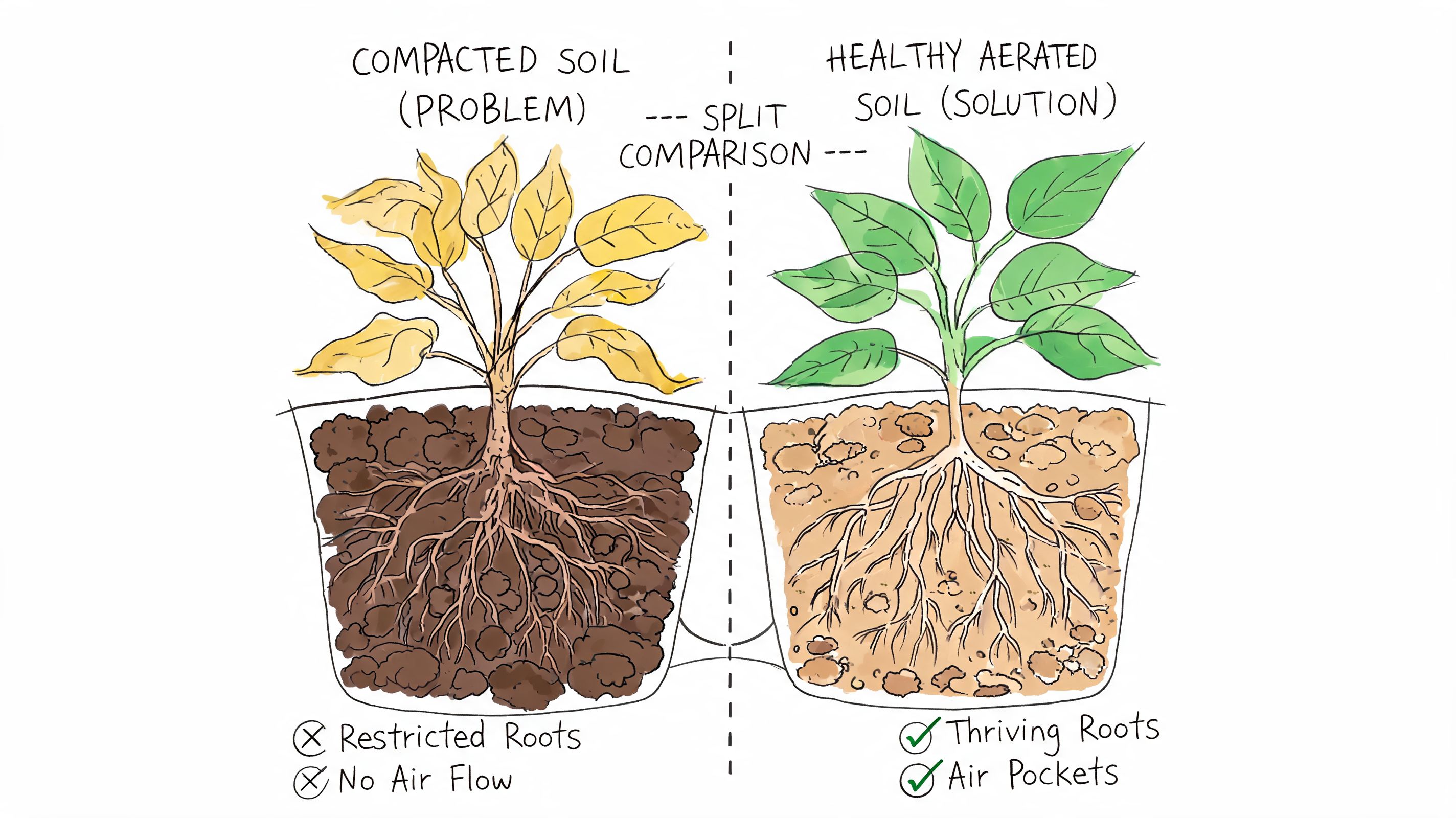
Quick fixes for common container problems
If the top stays wet for too long, the mix may be too dense for that plant or you may be watering too often. Fungus gnats, sour smells, and yellowing can all show up when roots stay too wet.
If water runs straight through and the plant droops fast, the opposite may be happening. The mix may be too airy for the pot size, climate, or plant type.
Use this troubleshooting list:
-
Plant stays soggy
Let the mix dry more between waterings. Next time, use a blend with more aeration. -
Soil surface crusts and shrinks from the pot edge
Rewet slowly and thoroughly. Some mixes become hard to rehydrate once very dry. -
Roots seem stuck and growth slows
The mix may have compacted or the plant may need repotting into fresh medium. -
Leaves yellow even though you water carefully
Check whether the plant has outgrown the available nutrition, not just the pot.
Wet roots often look like underwatering above ground. The leaves droop either way, which is why so many people add more water and make the problem worse.
What to know about peat-free mixes
A lot of shoppers now want lower-peat or peat-free products, and the market is moving that way. Gardeners are seeing more mixes made with coir, rice hulls, and wood-based materials instead of relying as heavily on peat. The important catch is that these substitutions can change moisture retention, nutrient holding, and irrigation frequency, so peat-free mixes may need more deliberate watering and fertilization management according to this overview of changing potting soil mixes.
That doesn't mean peat-free is bad. It means different ingredients behave differently.
Here's the practical takeaway:
| If the mix contains more of this | You may notice this |
|---|---|
| Coir | Different moisture behavior than peat |
| Rice hulls | Lighter texture and changing drainage over time |
| Wood-based materials | A different watering rhythm and nutrient feel |
So if you switch from one mix to another and your usual watering routine stops working, you didn't suddenly become bad at plant care. The mix changed.
A smart approach is to test one or two pots first. Watch how fast the container dries, how heavy it feels after watering, and how the plant responds over a couple of weeks. Then adjust. Sustainable choices are easier to stick with when you know how they behave in real life.
Organic potting mix soil works best when you stop thinking of it as dirt and start thinking of it as a tool. Each ingredient has a job. Some hold water. Some create air. Some feed. The right balance depends on the plant.
If you want the short version, use garden soil in the ground, use potting mix in containers, and match the blend to the plant's watering and feeding habits. If you make your own, keep compost in a reasonable range and build the rest of the mix around drainage and moisture needs.
If you also care for a lawn and want help turning soil test numbers into a clear fertilizer plan, MySoilPlan can help you map out what to apply and when.